A review of Mohsin Hamid's The Reluctant Fundamentalist by Amy D'Aureli
The Reluctant Fundamentalist. Mohsin Hamid. Harcourt, 2007. 192 pp., $22 (hardcover).
In an interview on the Harcourt Books website promoting The Reluctant Fundamentalist, Mohsin Hamid states that he has “written from a stance that is both critical of and loving toward America.” Published in 2007, this bold novel takes on the divide between east and west, one that runs far deeper than Americans may have realized. At a time of great movement and potential change in our country’s political future, Mohsin Hamid has taken on a challenging task: presenting readers with the story of a young man from Pakistan who uncovers major flaws in the American dream. Hamid is a notable Pakistani author, whose first novel, Moth Smoke, was published in 2000.
From the first page, The Reluctant Fundamentalist is surprising. Narrated by Changez, a man in Lahore, Pakistan, who curiously encounters an American man and invites him to share tea and an evening meal with him, Changez address the reader, drawing him or her into a detailed and uneasy telling of his experiences in America. His is the only voice we are given throughout the novel, the sole individual perspective of one man, whom we may choose to trust, or not.
Changez’s story mysteriously unfolds as he attempts to relate to an unidentified American man, recounting his Princeton education, his career at Underwood Samson, a prestigious Manhattan business appraisal firm, and his path towards acceptance into New York high society. Throughout his forays into this new life, Changez was a successful, Americanized, young man.
But Mohsin Hamid never glosses over any glaring differences that arose amongst Changez and his peers. Changez, for instance, reveals early on that his family in Pakistan, once part of the higher class, had a reputation that was losing prominence in a state of financial struggle. Ideas about money and value are constantly being worked out in Changez’s mind. A scholarship student among wealthy and aloof Princeton classmates on a vacation in Greece, Changez notices an attitude that sets him apart. “I…found myself wondering by what quirk of human history my companions – many of whom I would have regarded as upstarts in my own country, so devoid of refinement were they – were in a position to conduct themselves in the world as though they were its ruling class.”
As the novel progresses, with frequent interruptions from the vague, conversational narrative taking place in Pakistan, Changez’s isolation continues to grow. He reflects upon his relationship with Erica, also a Princeton graduate, which is never fully realized. She is emotionally tied up in the memory of her ex-boyfriend, Chris, who died of cancer. Changez’s challenged feelings of self-worth carry over to his position at Underwood Samson, where he travels to different businesses in and outside of the United States, evaluating their past and future success.
Changez tells the American that he no longer wanted to work for this company. Hamid presents the idea of the “janissary,” or a young man who is conscripted into a strict and dominating army to fight against his own people. Changez starts to believe that his role at Underwood Samson has become that of a janissary in America, “teasing out the true nature of those drivers that determine an asset’s value”. And in the wake of the September 11th terrorist attacks on the World Trade Center, he feels that he is neglecting his family in Pakistan, a place that becomes less stable as eastern and western tensions rise.
Mohsin Hamid had completed this novel before this monumental and devastating event had taken place. “The first draft…was completed in the summer of 2001, before September 11. The catastrophe that followed swamped my story; it was years later that I had something that could be salvaged.” He understood that to leave this subject matter out of the book would ignore quite a significant, even offensive point of view on the terrorist attacks, one that, nonetheless, needed to be spoken of. While watching the news coverage of the attacks, Changez explains that he was “remarkably pleased…caught up in the symbolism of it all, the fact that someone had so visibly brought America to her knees.” His reaction becomes yet another isolating factor for him in America.
For the novel’s characters and places, the terrorist attacks also bring about an emphasis on nostalgia. America longs for a peaceful and stable past, Changez wishes to return home to his family in Pakistan, and Erica loses herself completely to depression.
As these struggles all intensify, Changez’s statements to the American man become more audacious, and their interaction becomes more complicated. Having returned to Pakistan, Changez is now a professor who has made a name speaking out against the country that pushed him toward success. At this point, the reader becomes less certain about Changez, and may wonder why he has been telling this story, why this man continues to listen, and how the conversation will end as the night comes to a close, and both men go their separate ways.
Overall, Mohsin Hamid’s novel is thought provoking to say the least. Through Changez’s storytelling, the reader experiences the other side of American values and sense of entitlement. These thoughts are grounded in a real personal struggle to discover what is fundamental.
The Reluctant Fundamentalist questions differences, the struggle for common ground, anger and enduring resentment. Though the words and opinions Hamid presents can be jarring, and the ending to this novel leaves us with a sense of divide, his motives are admirable: “We need to stop being so confused by the fear we are fed; A shared humanity should unite us with people we are encouraged to think of as our enemies.”
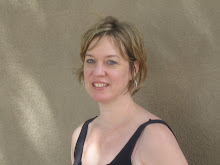
Amy D'Aureli is a Writing Major with a Spanish Minor. Amy is an editor for Loyola College's fiction and poetry literary magazine, The Garland, and is also part of the Advanced Poetry Workshop, in which she is publishing a chapbook of poems entitled, "My New York."
Sunday, April 20, 2008


Monday, April 14, 2008
Growing Up Global
A review of Geraldine Brooks’ Foreign Correspondence
by Alison Koentje
Geraldine Brooks. Foreign Correspondence: A Pen Pal’s Journey from Down Under to All Over. Anchor, 1999. 217 pp., $13.95 (paper).
For readers whose lives are consumed with text messages, email and AIM, it may be hard to appreciate a memoir like Geraldine Brooks’ Foreign Correspondence centered on the art of writing letters. But teenage angst and awkwardness transcend all communication mediums, and Brooks successfully conveys the universal longing to be someone else, somewhere else. Through her memoir readers see a writer blossom as a precocious little girl with a pen-pal obsession becomes a highly respected Middle East foreign correspondent and later, a critically acclaimed novelist—transformations, Brooks would have you believe, that hinge on putting the pen to paper.
Now a Pulitzer prize-winning author, Brooks’ origins were relatively humble: a sickly girl growing up in the humdrum Sydney suburbs of the 1960’s and 70’s, suffering from “Cultural Cringe—the Australian belief that just about anybody anywhere did things better that we did,” she longed to be a part of a more cosmopolitan world. Growing up under Menzies, an Anglophile president, didn’t help. Through the epistolary form (a medium that many now claim dead or dying), young Brooks reaches out to the world.
Brooks’ father, Laurie, is an American expatriate with an enigmatic past. His own frequent mail correspondence (recipients ranged from a local news columnist to Albert Einstein) inspired Brooks to do the same. a gesture she hoped would bring them closer together. The precocious and lonely child writes letters to better understand the world outside Australia and to connect with the world her father once inhabited: “I wanted,” she writes, “to learn something about the world my father had inhabited when he was my age.” But her father’s private inner life and secrets are something she must wait to discover later on. While nursing her father through his final days, the adult Brooks re-discovers her letters and the childhood self who sought to escape her “average” life in Sydney’s suburbs.
Brooks’ initial correspondent is Sonny, daughter of a popular newspaper columnist growing up in the affluent suburb of North Shore nearby. Though Sonny shows her “that pen-friendship allow[s] the bridging of otherwise unbridgeable spaces”, offering her a new perspective on the world, their correspondence dwindles as Sonny immerses herself in theatre, ballet, acting and the like. Next, Brooks writes to an American girl named Joannie, who shares her obsession with all things Star Trek. The two girls hit it off, exchanging weekly letters, often laden with Vulcan sayings and anti-Vietnam messages. In one letter Joannie describes her constant fear of nuclear attack: “Last night around eleven fifteen P.M. the whole sky lit up all pale orange for a few seconds and then there came the loudest thunderclap I’ve ever heard…I was so sure of [the bomb being dropped] that I was almost wondering to myself, ‘How much longer am I going to be alive?’” Such personal disclosures enable them become and remain best friends over the years. Her experience with Joannie becomes the fulcrum of the memoir.
Brooks’ interest in her father’s Zionist beliefs lead her to a third pen-pal, an Israeli Arab named Mishal. But, much to her dismay, Mishal doesn’t live on a kibbutz and is a Christian. She writes again to the pen-pal service that connected her to Mishal, explicitly listing “Judaism” as one her interests. The new correspondent, Cohen, turns out to be dull, interested only in sports and the beach—“the same dreary subjects that obsessed the Aussie youth to whom I wouldn’t give the time of day.” What is most striking about the young Brooks is her political zeal and awareness, her high level of social inquiry and discourse. She reads Leon Uris and The Rise and Fall of the Third Reich, and gives passionate orations justifying the 1948 Israeli War of Independence in her English class. Her penchant for the political, religious and social lead her to Mishal and Cohen, and later, to the Middle East where she will make a name for herself as a foreign correspondent.
Just as her interest in Judaism led her to Mishal and Cohen, a young Brooks’ appreciation of French art—the paintings of Cezanne, the sculptures of Rodin— coupled with her growing feelings of distaste for “the bourgeois values of my backwater country” leads her to the French Janine, someone she envisions “hurling cobblestones by day and retreating to an intimate Left bank brasserie” by night. The young writer’s assumptions are a bit skewed: she is surprised to discover that Janine--no Maoist student radical of Paris--is a peasant girl from a town so small it’s not named on the map. But Brooks needs a decade of maturation and traveling before she can appreciate Janine’s simple life.
In the memoir’s second part, we meet Brooks as an adult: a successful foreign correspondent for various international publications. Married to a Jewish American, she converts to Judaism. While nursing her ailing father in Sydney, the journalistic impulse strikes and Brooks determines to see where Sonny, Mishal, Cohen and Janine ended up nearly twenty years after the onset of their correspondences.
Foreign Correspondence is well-written and humorous; its intimate feel enhanced by the personal photographs in the middle of the book. Any memoirist runs the risk of lapsing into self-indulgence. Brooks resists this temptation; Foreign Correspondence is a finely crafted bildunsroman, capturing the author’s life-long journey into knowledge—a gradual move from cultural misappraisal, filial mysteries and self-doubt. Within her personal narrative Brooks places modest jewels of wisdom that expand the book’s breadth, giving it a scope that’s bigger than her personal history: “Reporters look for the quotable people, the articulate . . . Meanwhile, real life is happening elsewhere, in the middle, among the Mishals and the Cohens, who care more about their families and jobs than ideology.”
Part of the book’s success is Brooks’ balanced narrative structure: Part One introducing Brooks’ childhood and the pen-pals, Part Two mapping her transition into adulthood and her rediscovery of the lost correspondents. Brooks wrote Foreign Correspondence in between her nonfiction literary debut, The Nine Parts of Desire: The Hidden World of Islamic Women and a number of critically acclaimed historical novels, including the Pulitzer prize-winning March. In it, she writes that “To be a witness to the extremity of human behavior, you have to pay the price of admission.” For Brooks, that admission has been paid. Her simple yet gripping memoir is a gift to readers and possible future writers, especially young women. (The memoir won the 1999 Nita B. Kibble Literary Award for Women Writers). Brooks’ continued thirst for experience, education and cultural awareness are awe-inspiring.
In these dark times of ethnocentrism and xenophobia, Brook’s memoir gently urges us to get outside ourselves and see the world—to use writing as a connection to the world.
Alison J. Koentje is an Interdisciplinary English and Writing Major with a Minor in Gender Studies. A member of the English Honor Society (Sigma Tau Delta), the Writing Honor Society (Pi Epsilon Pi), Phi Beta Kappa, and the National Jesuit Honor Society (Alpha Sigma Nu), Alison is also the Editor-in-Chief of The Forum, Loyola's nonfiction literary magazine and currently interns at Mason-Dixon ARRIVE, an upscale monthly magazine that focuses on the Chesapeake lifestyle.
by Alison Koentje
Geraldine Brooks. Foreign Correspondence: A Pen Pal’s Journey from Down Under to All Over. Anchor, 1999. 217 pp., $13.95 (paper).
For readers whose lives are consumed with text messages, email and AIM, it may be hard to appreciate a memoir like Geraldine Brooks’ Foreign Correspondence centered on the art of writing letters. But teenage angst and awkwardness transcend all communication mediums, and Brooks successfully conveys the universal longing to be someone else, somewhere else. Through her memoir readers see a writer blossom as a precocious little girl with a pen-pal obsession becomes a highly respected Middle East foreign correspondent and later, a critically acclaimed novelist—transformations, Brooks would have you believe, that hinge on putting the pen to paper.
Now a Pulitzer prize-winning author, Brooks’ origins were relatively humble: a sickly girl growing up in the humdrum Sydney suburbs of the 1960’s and 70’s, suffering from “Cultural Cringe—the Australian belief that just about anybody anywhere did things better that we did,” she longed to be a part of a more cosmopolitan world. Growing up under Menzies, an Anglophile president, didn’t help. Through the epistolary form (a medium that many now claim dead or dying), young Brooks reaches out to the world.
Brooks’ father, Laurie, is an American expatriate with an enigmatic past. His own frequent mail correspondence (recipients ranged from a local news columnist to Albert Einstein) inspired Brooks to do the same. a gesture she hoped would bring them closer together. The precocious and lonely child writes letters to better understand the world outside Australia and to connect with the world her father once inhabited: “I wanted,” she writes, “to learn something about the world my father had inhabited when he was my age.” But her father’s private inner life and secrets are something she must wait to discover later on. While nursing her father through his final days, the adult Brooks re-discovers her letters and the childhood self who sought to escape her “average” life in Sydney’s suburbs.
Brooks’ initial correspondent is Sonny, daughter of a popular newspaper columnist growing up in the affluent suburb of North Shore nearby. Though Sonny shows her “that pen-friendship allow[s] the bridging of otherwise unbridgeable spaces”, offering her a new perspective on the world, their correspondence dwindles as Sonny immerses herself in theatre, ballet, acting and the like. Next, Brooks writes to an American girl named Joannie, who shares her obsession with all things Star Trek. The two girls hit it off, exchanging weekly letters, often laden with Vulcan sayings and anti-Vietnam messages. In one letter Joannie describes her constant fear of nuclear attack: “Last night around eleven fifteen P.M. the whole sky lit up all pale orange for a few seconds and then there came the loudest thunderclap I’ve ever heard…I was so sure of [the bomb being dropped] that I was almost wondering to myself, ‘How much longer am I going to be alive?’” Such personal disclosures enable them become and remain best friends over the years. Her experience with Joannie becomes the fulcrum of the memoir.
Brooks’ interest in her father’s Zionist beliefs lead her to a third pen-pal, an Israeli Arab named Mishal. But, much to her dismay, Mishal doesn’t live on a kibbutz and is a Christian. She writes again to the pen-pal service that connected her to Mishal, explicitly listing “Judaism” as one her interests. The new correspondent, Cohen, turns out to be dull, interested only in sports and the beach—“the same dreary subjects that obsessed the Aussie youth to whom I wouldn’t give the time of day.” What is most striking about the young Brooks is her political zeal and awareness, her high level of social inquiry and discourse. She reads Leon Uris and The Rise and Fall of the Third Reich, and gives passionate orations justifying the 1948 Israeli War of Independence in her English class. Her penchant for the political, religious and social lead her to Mishal and Cohen, and later, to the Middle East where she will make a name for herself as a foreign correspondent.
Just as her interest in Judaism led her to Mishal and Cohen, a young Brooks’ appreciation of French art—the paintings of Cezanne, the sculptures of Rodin— coupled with her growing feelings of distaste for “the bourgeois values of my backwater country” leads her to the French Janine, someone she envisions “hurling cobblestones by day and retreating to an intimate Left bank brasserie” by night. The young writer’s assumptions are a bit skewed: she is surprised to discover that Janine--no Maoist student radical of Paris--is a peasant girl from a town so small it’s not named on the map. But Brooks needs a decade of maturation and traveling before she can appreciate Janine’s simple life.
In the memoir’s second part, we meet Brooks as an adult: a successful foreign correspondent for various international publications. Married to a Jewish American, she converts to Judaism. While nursing her ailing father in Sydney, the journalistic impulse strikes and Brooks determines to see where Sonny, Mishal, Cohen and Janine ended up nearly twenty years after the onset of their correspondences.
Foreign Correspondence is well-written and humorous; its intimate feel enhanced by the personal photographs in the middle of the book. Any memoirist runs the risk of lapsing into self-indulgence. Brooks resists this temptation; Foreign Correspondence is a finely crafted bildunsroman, capturing the author’s life-long journey into knowledge—a gradual move from cultural misappraisal, filial mysteries and self-doubt. Within her personal narrative Brooks places modest jewels of wisdom that expand the book’s breadth, giving it a scope that’s bigger than her personal history: “Reporters look for the quotable people, the articulate . . . Meanwhile, real life is happening elsewhere, in the middle, among the Mishals and the Cohens, who care more about their families and jobs than ideology.”
Part of the book’s success is Brooks’ balanced narrative structure: Part One introducing Brooks’ childhood and the pen-pals, Part Two mapping her transition into adulthood and her rediscovery of the lost correspondents. Brooks wrote Foreign Correspondence in between her nonfiction literary debut, The Nine Parts of Desire: The Hidden World of Islamic Women and a number of critically acclaimed historical novels, including the Pulitzer prize-winning March. In it, she writes that “To be a witness to the extremity of human behavior, you have to pay the price of admission.” For Brooks, that admission has been paid. Her simple yet gripping memoir is a gift to readers and possible future writers, especially young women. (The memoir won the 1999 Nita B. Kibble Literary Award for Women Writers). Brooks’ continued thirst for experience, education and cultural awareness are awe-inspiring.
In these dark times of ethnocentrism and xenophobia, Brook’s memoir gently urges us to get outside ourselves and see the world—to use writing as a connection to the world.
Alison J. Koentje is an Interdisciplinary English and Writing Major with a Minor in Gender Studies. A member of the English Honor Society (Sigma Tau Delta), the Writing Honor Society (Pi Epsilon Pi), Phi Beta Kappa, and the National Jesuit Honor Society (Alpha Sigma Nu), Alison is also the Editor-in-Chief of The Forum, Loyola's nonfiction literary magazine and currently interns at Mason-Dixon ARRIVE, an upscale monthly magazine that focuses on the Chesapeake lifestyle.
Monday, April 7, 2008
What's a Classic?
Janet Reuter writes:
Literary work that I personally find interesting and extraordinary doesn't necessarily mean it is "extra-ordinary": not tales about big issues or events. My favorite book for about four years was titled Love at the Laundromat, and you can probably guess that it was not given any literary awards, probably never featured on any bestseller list, and actually, it would be pretty difficult to find in a bookstore or library. The book traveled with me to France, Jamaica, and every beach on the east coast of the United States. And no lies--I read this book again over Christmas break. I can't name the author and I'll spare you the details, yet this might be doing you a disservice, as the romance between Joanne, your local fluff-and-fold girl, and Scott, the handsome college student who does his landlady's laundry, is quite a classic. What I consider good literature and good writing doesn't have to be "profound;" there is no need to seem overly intelligent or try too hard. As long as there is someone out there who appreciates it and who will it keep it on her nightstand, it's worthy.
Sunday, April 6, 2008
Who Knows Where the Time Goes?

Senior Seminar
Row 1 (l to r): Matt Anderson, Kendra Richard, Alison Koentje, Lorraine Cuddeback
Row 2 (l to r): Amy D'Aureli, Courtney Carbone, Raina Fields, Lorraine Wolters, Joseph
DelGabbo, Christopher Varlack
Not pictured: Erin O'Hara, Janet Reuter
In the past few months, the Seminar students have asked a lot of questions: practical questions about grad school and publication; about jobs and vitas; about contests and the ethics of multiple submissions. But they've also been willing to ask the big questions: what makes a book last? How do we know great writing? How do we grow as writers? Above all: how does a writer keep the faith when words or plots prove elusive? And when the rejections pour in?
I think they know.
Their college years have yielded insights and rich rewards. Among their collective honors and pursuits: the prestigious Academy of American Poets Prize; internships at local magazines; editorships of Forum and Garland (our nonfiction and literary magazines); columns in Loyola's student paper, The Greyhound; departmental essay prizes; the production of Warnings (a student-directed ‘zine); in collaboration with Dr. Robert Miola (renowned Shakespeare scholar), the production of Measure for Measure, as a text in the Aperio Series of Classics at Apprentice House) ; the production of an anthology of poetry and fiction from the Carver Center, a Baltimore school for the literary arts.
Saturday, April 5, 2008
The Falling Man: His Latest Manifestation
A review of Don DeLillo's Falling Man by Chris Varlack
Don DeLillo. Falling Man. Scribner, 2007. 246 pp., $26.00 (hardcover).
Even today, Ground Zero conjures up unpleasant memories of the past—the blur of smoke and sirens, the flurry of broken glass, the ever-present sentiment that things were forever changed. As Don DeLillo writes in his latest novel, Falling Man, New York instantly became "a world, a time and space of falling ash.” With this first sentence, he sends us on a journey into the life-altering effects of the 9/11 attacks, maneuvering through the stories of Lianne and Keith, a divorced couple who reconnect in the days and weeks after the planes hit.
Cast back to that past of dismay and unparalleled fear, we are bombarded in this novel with the confusion and emotional tension that initially surrounded the terrorist attacks. And yet, there is something about the “frank and innocent openness of manner” in which DeLillo recreates the days after the attacks that causes his readers, like the characters he creates, to stop “feeling unnerved after a while.” But even then, deeply immersed in Lianne and Keith’s unfolding story, we might find ourselves inclined to ask: After so little time has passed, how can DeLillo even write about a subject that seems to hit so close to home?
That, dear reader, is the question and the answer. It seems that Falling Man is not just the story of two distant people who are forced to reevaluate their own perspectives. It is meant to be a reflective mirror, the untold story of millions of Americans whose lives were transformed in dramatic as well as subtle ways. Present then is an epiphany, a discovery about the self that makes this novel an odd sort of therapeutic journey. This approach, however, may not sit well with some readers who feel that the subject is still too emotionally-charged to be discussed.
While the novel is certainly not one of those post-9/11 dissertations, the ones you might often be inclined to toss aside at the bookstore, the characters who DeLillo asks us to identify with can be seen as relatively flat. For example, Keith never seems to grow emotionally, falling backing into the predictable role of a gambler—a role he adopts in the past, retaining it later as an escape, a release. But beyond this fundamental flaw, Falling Man is still the type of novel that you might enjoy reading a couple of times.
DeLillo exhibits a literary style here typical of poetic prose. For instance, Carmen G., one of the Alzheimer patients we meet, writes, “I am closer to God than ever, am closer, will be closer, shall be closer.” There is a lingering in this character’s speech—an irregularity, unnatural at best, but forgivable. DeLillo presents what is only fairly categorized as an unfiltered feeling to his dialogue as if the idiosyncrasies are just as important as the content that the characters express. Lianne also echoes this style later in the novel, questioning, “You’re not still sky-watching, are you? Searching the skies day and night? No. Or are you?” This method—how DeLillo shapes what his characters say—becomes an intriguing lens as they attempt to make sense of this fearful and also confusing post-9/11 world.
Throughout Falling Man, DeLillo crafts this poetic style with mastery, repeated phrases gaining intensity, imbued with new meaning as they shift and lightly turn. He utilizes a layered approach to shape this exploration, layering the more present experience of Lianne and Keith with a variety of smaller narratives that add depth and complexity to the story he is sharing. But it is clear as the novel progresses that these stories of characters like the Alzheimer patients and Florence Givens, Keith’s post-9/11 love affair, are just another piece of the puzzle we readers are still, years later, trying to completely figure out.
DeLillo’s Falling Man is ultimately then a book of remembering, an engaging and compelling look into the multiplicity of perspectives from which we now view our world. And DeLillo only further colors this world by presenting a parallel narrative—that of the hijackers he creates—Hammad and Amir. Until the last section of the novel, this narrative is separated from the overarching tale of Lianne and Keith. With this, the reader gets a glimpse into an alternative perspective: three short moments—impressively crafted, though one might wish they had a stronger presence—before the planes crash and the towers fall in a flurry of shattering glass. Here we get a deeper look into the lives and thoughts of the terrorists that caused this life-altering change.
These scenes hold immense power. DeLillo writes through a series of possibilities, not conveying a holy war confidently waged, but rather a narrative where “terrorists” become individuals swept up in a sequence of fast-paced events, individuals plagued by inner conflict. As the novel progresses, it becomes clear that what is absent, for the most part, is the overwhelming clash of cultures, the essential divide that separates the United States from the Al Qaeda regime. The result is that we are asked to put aside our presuppositions, and rest with the distinct chance that the hijackers were actually human rather than the murderers we now have perceived them to be.
Ultimately Falling Man demands its readers’ attention at every corner. With its vague pronouns and sudden shifts in time, it is the kind of novel that lets one know he/she hasn’t been reading closely enough. In the final scene before the crash, for instance, DeLillo switches without warning between the perspectives of Hammad and Keith, not signifying the shift with names, but maintaining his use of the undefined “he.” Perhaps his goal here was to suggest that we are not so unlike, that the “us-them” philosophy of the present is actually a perspective of the past, and a flawed one at that.
Still, at the end, when the last words echo like recurring memories in our minds—“He walked and saw it fall, arms waving like nothing in this life”—we begin to recreate our favorite characters in our imaginations, imagining like a good story is supposed to allow us to do. While we are certainly left to ponder exactly who the falling man is—Keith with his regression to the past? Ourselves? Just a photograph taken by Richard Drew in the moments after the planes hit?—the question that is most likely at the forefront of your mind is the question that any author would love to hear: what happens to Lianne and Keith—or more importantly, what happens to us—next?
Christopher Allen Varlack has studied the literary arts at Carver Center for Arts and Technology as well as Loyola College in Maryland. He was recently accepted into the MFA program at the University of Southern Maine, a low-residency program he will attend starting in the summer. Varlack was awarded second place for poetry in the Dylan Days Contest; his poems will appear in Talkin' Blues, the Dylan Days Literary Magazine of Hibbings, Minnesota.
Don DeLillo. Falling Man. Scribner, 2007. 246 pp., $26.00 (hardcover).
Even today, Ground Zero conjures up unpleasant memories of the past—the blur of smoke and sirens, the flurry of broken glass, the ever-present sentiment that things were forever changed. As Don DeLillo writes in his latest novel, Falling Man, New York instantly became "a world, a time and space of falling ash.” With this first sentence, he sends us on a journey into the life-altering effects of the 9/11 attacks, maneuvering through the stories of Lianne and Keith, a divorced couple who reconnect in the days and weeks after the planes hit.
Cast back to that past of dismay and unparalleled fear, we are bombarded in this novel with the confusion and emotional tension that initially surrounded the terrorist attacks. And yet, there is something about the “frank and innocent openness of manner” in which DeLillo recreates the days after the attacks that causes his readers, like the characters he creates, to stop “feeling unnerved after a while.” But even then, deeply immersed in Lianne and Keith’s unfolding story, we might find ourselves inclined to ask: After so little time has passed, how can DeLillo even write about a subject that seems to hit so close to home?
That, dear reader, is the question and the answer. It seems that Falling Man is not just the story of two distant people who are forced to reevaluate their own perspectives. It is meant to be a reflective mirror, the untold story of millions of Americans whose lives were transformed in dramatic as well as subtle ways. Present then is an epiphany, a discovery about the self that makes this novel an odd sort of therapeutic journey. This approach, however, may not sit well with some readers who feel that the subject is still too emotionally-charged to be discussed.
While the novel is certainly not one of those post-9/11 dissertations, the ones you might often be inclined to toss aside at the bookstore, the characters who DeLillo asks us to identify with can be seen as relatively flat. For example, Keith never seems to grow emotionally, falling backing into the predictable role of a gambler—a role he adopts in the past, retaining it later as an escape, a release. But beyond this fundamental flaw, Falling Man is still the type of novel that you might enjoy reading a couple of times.
DeLillo exhibits a literary style here typical of poetic prose. For instance, Carmen G., one of the Alzheimer patients we meet, writes, “I am closer to God than ever, am closer, will be closer, shall be closer.” There is a lingering in this character’s speech—an irregularity, unnatural at best, but forgivable. DeLillo presents what is only fairly categorized as an unfiltered feeling to his dialogue as if the idiosyncrasies are just as important as the content that the characters express. Lianne also echoes this style later in the novel, questioning, “You’re not still sky-watching, are you? Searching the skies day and night? No. Or are you?” This method—how DeLillo shapes what his characters say—becomes an intriguing lens as they attempt to make sense of this fearful and also confusing post-9/11 world.
Throughout Falling Man, DeLillo crafts this poetic style with mastery, repeated phrases gaining intensity, imbued with new meaning as they shift and lightly turn. He utilizes a layered approach to shape this exploration, layering the more present experience of Lianne and Keith with a variety of smaller narratives that add depth and complexity to the story he is sharing. But it is clear as the novel progresses that these stories of characters like the Alzheimer patients and Florence Givens, Keith’s post-9/11 love affair, are just another piece of the puzzle we readers are still, years later, trying to completely figure out.
DeLillo’s Falling Man is ultimately then a book of remembering, an engaging and compelling look into the multiplicity of perspectives from which we now view our world. And DeLillo only further colors this world by presenting a parallel narrative—that of the hijackers he creates—Hammad and Amir. Until the last section of the novel, this narrative is separated from the overarching tale of Lianne and Keith. With this, the reader gets a glimpse into an alternative perspective: three short moments—impressively crafted, though one might wish they had a stronger presence—before the planes crash and the towers fall in a flurry of shattering glass. Here we get a deeper look into the lives and thoughts of the terrorists that caused this life-altering change.
These scenes hold immense power. DeLillo writes through a series of possibilities, not conveying a holy war confidently waged, but rather a narrative where “terrorists” become individuals swept up in a sequence of fast-paced events, individuals plagued by inner conflict. As the novel progresses, it becomes clear that what is absent, for the most part, is the overwhelming clash of cultures, the essential divide that separates the United States from the Al Qaeda regime. The result is that we are asked to put aside our presuppositions, and rest with the distinct chance that the hijackers were actually human rather than the murderers we now have perceived them to be.
Ultimately Falling Man demands its readers’ attention at every corner. With its vague pronouns and sudden shifts in time, it is the kind of novel that lets one know he/she hasn’t been reading closely enough. In the final scene before the crash, for instance, DeLillo switches without warning between the perspectives of Hammad and Keith, not signifying the shift with names, but maintaining his use of the undefined “he.” Perhaps his goal here was to suggest that we are not so unlike, that the “us-them” philosophy of the present is actually a perspective of the past, and a flawed one at that.
Still, at the end, when the last words echo like recurring memories in our minds—“He walked and saw it fall, arms waving like nothing in this life”—we begin to recreate our favorite characters in our imaginations, imagining like a good story is supposed to allow us to do. While we are certainly left to ponder exactly who the falling man is—Keith with his regression to the past? Ourselves? Just a photograph taken by Richard Drew in the moments after the planes hit?—the question that is most likely at the forefront of your mind is the question that any author would love to hear: what happens to Lianne and Keith—or more importantly, what happens to us—next?
Christopher Allen Varlack has studied the literary arts at Carver Center for Arts and Technology as well as Loyola College in Maryland. He was recently accepted into the MFA program at the University of Southern Maine, a low-residency program he will attend starting in the summer. Varlack was awarded second place for poetry in the Dylan Days Contest; his poems will appear in Talkin' Blues, the Dylan Days Literary Magazine of Hibbings, Minnesota.
Sunday, March 30, 2008
Welcome and thanks for stopping by the Senior Seminar: New Writers, Newer Books blog.
Since January our small community of writers in Loyola’s Writing Department has been reading fiction, nonfiction, and poetry by contemporary writers and reflecting on what it means to be a writer today.
When asked to teach this course, I’d been reading James Wolcott’s commentary, “The Battle of the Book” (The New Republic, December 10, 2007). Reflecting on the familiar concern that digitalization of print books lead to obsolescence, Wolcott uncovers a deeper one: that “in house book reviewing has been eliminated, abridged, or downgraded.” This matters, he writes, because “When you deprive the coverage of books of adequate space and talent, you are declaring that books are not important.” Reviews matter, he suggests, because an “intelligent discussion of a book has the power to change its readers ideas about how he votes or who he loves—to furnish nothing less than a ‘criticism of life.’”
Many students, I knew, were familiar with Amazon readers' tips and authors' blurbs, but few had encountered a book review as the transformative experience Wolcott describes. Done well, Wolcott suggests, a review is “a formidable thought stream, and knowledge stream. It inducts its reader into the enchanted circle of those who really live by their minds.” In this view, the review is “a small but significant aid to genuine citizenship, to meaningful living.” Of the multiplicity of reviews meeting this gold standard, we enjoyed the reflections of a few stellar contributors to this genre--Angela Carter, Ursula K. LeGuin, Randall Jarrell, and Seamus Heaney—in addition to the many writers whose insightful commentary graces the pages of the Times’ Sunday Book Review.
In the next weeks, you’ll read reviews of the books the Seminar has been reading as well as reflections on reading and writing experiences that have shaped—and will continue to shape—the writers these apprentices are destined to become.
Since January our small community of writers in Loyola’s Writing Department has been reading fiction, nonfiction, and poetry by contemporary writers and reflecting on what it means to be a writer today.
When asked to teach this course, I’d been reading James Wolcott’s commentary, “The Battle of the Book” (The New Republic, December 10, 2007). Reflecting on the familiar concern that digitalization of print books lead to obsolescence, Wolcott uncovers a deeper one: that “in house book reviewing has been eliminated, abridged, or downgraded.” This matters, he writes, because “When you deprive the coverage of books of adequate space and talent, you are declaring that books are not important.” Reviews matter, he suggests, because an “intelligent discussion of a book has the power to change its readers ideas about how he votes or who he loves—to furnish nothing less than a ‘criticism of life.’”
Many students, I knew, were familiar with Amazon readers' tips and authors' blurbs, but few had encountered a book review as the transformative experience Wolcott describes. Done well, Wolcott suggests, a review is “a formidable thought stream, and knowledge stream. It inducts its reader into the enchanted circle of those who really live by their minds.” In this view, the review is “a small but significant aid to genuine citizenship, to meaningful living.” Of the multiplicity of reviews meeting this gold standard, we enjoyed the reflections of a few stellar contributors to this genre--Angela Carter, Ursula K. LeGuin, Randall Jarrell, and Seamus Heaney—in addition to the many writers whose insightful commentary graces the pages of the Times’ Sunday Book Review.
In the next weeks, you’ll read reviews of the books the Seminar has been reading as well as reflections on reading and writing experiences that have shaped—and will continue to shape—the writers these apprentices are destined to become.
Subscribe to:
Posts (Atom)